

The knowledge generated through the Cancer Prevention at Work (CPW) project is intended to contribute to the wellbeing of individuals and their communities. This involves not only ad
vancing the early detection of pathogens which, if left untreated, may lead to cancer, but also providing clear and accessible information to the public on how to prevent these infections and protect their health.
We know that health is shaped by multiple factors: where we are born, where we work, the people we live with, and the opportunities we have to access information and healthcare services. Health also has an important social and community dimension, as our decisions and habits can affect those around us.
Within this context, one of CPW’s key areas of action focuses on screening active workers for Helicobacter pylori, with the aim of identifying potential infections and promoting prevention strategies within both family and workplace environments. Helicobacter pylori is a bacterium associated with gastric cancer, and its early detection is essential in preventing future complications.
Gamified Learning for Health Awareness
As part of this initiative, the project developed an educational intervention aimed at workers and their families, addressing topics related to Helicobacter pylori infection, including symptoms, modes of transmission, and treatment options.
The initiative incorporated a methodology based on gamification — the use of game dynamics and elements in educational and healthcare contexts. Several studies have described gamification as an effective strategy for increasing motivation, participation and engagement in learning activities, while also encouraging positive attitudes towards health education.¹ ²
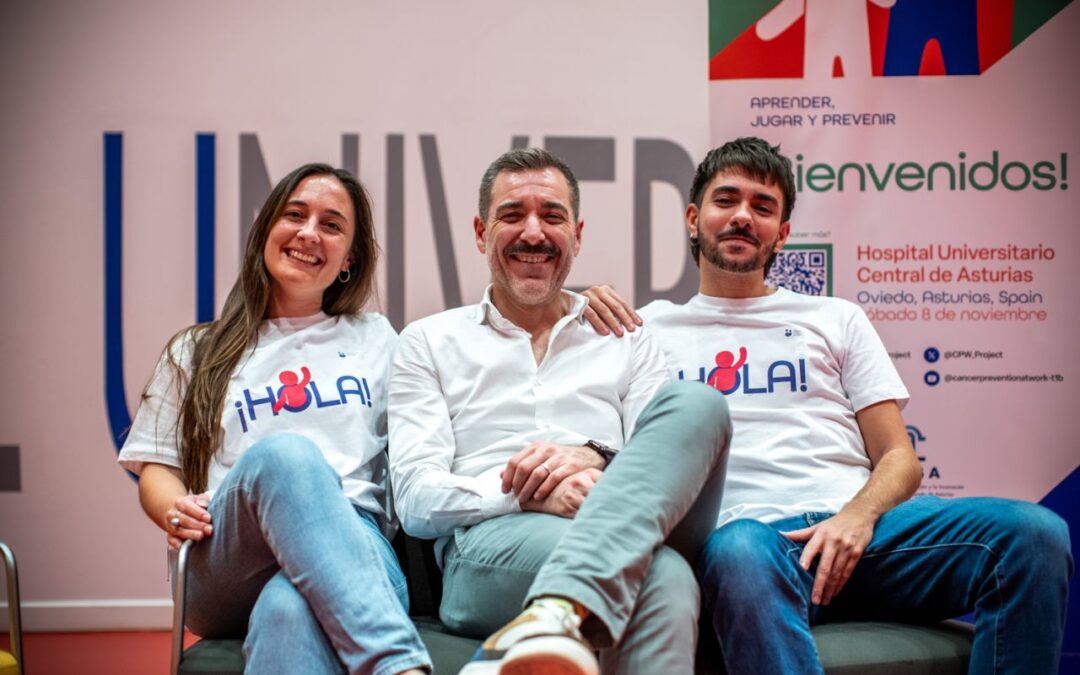
With this approach in mind, the CPW communication team — represented by WeDo | Projects Intelligence Made Easy — together with the research team leading the Helicobacter pylori study in Asturias — the Foundation for Biosanitary Research in Asturias (FINBA) — organised a free community health event at the Hospital Universitario Central de Asturias.
During the event, active workers from Asturias and their families took part in recreational activities, competitions, educational workshops, live music and community engagement spaces. Participants also had access to informative materials on gastric cancer prevention and community health. In addition, dedicated childcare and recreation areas were provided to encourage family participation.

Community Health and Participation
Beyond simply providing information, initiatives of this kind aim to strengthen people’s active involvement in caring for their own health and that of their communities. Health education based on participatory experiences can help create communities that are better informed, more aware of risk factors, and better equipped to make preventive decisions.
For CPW, these actions represent an opportunity to bring scientific research closer to people’s everyday lives, fostering workplace and family environments in which prevention and wellbeing become part of the wider community conversation.
References
- van Gaalen AEJ, Brouwer J, Schönrock-Adema J, Bouwkamp-Timmer T, Jaarsma ADC, Georgiadis JR. Gamification of health professions education: a systematic review. Advances in Health Sciences Education: Theory and Practice. 2021 May;26(2):683–711. doi:10.1007/s10459-020-10000-3.
- Haruna H., Hu X., Chu S.K.W., Mellecker R.R., Gabriel G., Ndekao P.S. Improving Sexual Health Education Programmes for Adolescent Students through Game-Based Learning and Gamification. International Journal of Environmental Research and Public Health. 2018;15(9):2027. https://doi.org/10.3390/ijerph15092027